Car Window Tinting: From Aesthetic to Functional
Car window tinting has come a long way since its early days as a cosmetic enhancement. What was once seen as a simple way to add a touch of style to a vehicle has evolved into a multifaceted feature that offers a wide range of practical benefits. In this article, we’ll explore the fascinating journey of car window tinting, from its aesthetic origins to its modern-day role as a functional and technologically advanced component of the driving experience.
The Roots of Car Window Tinting
The practice of tinting car windows can be traced back to the 1950s when it first gained popularity among car enthusiasts and customizers. Initially, window tinting was primarily used to enhance a vehicle’s appearance, with drivers opting for dark, smoky shades that gave their cars a sleek, sophisticated look.
As the years passed, the tinting industry continued to evolve by introducing new materials and techniques. Advancements in film technology allowed for a broader range of tint shades and opacity levels, catering to car owners’ diverse preferences.
The Shift Towards Functionality
While the aesthetic appeal of window tinting remained a key factor, a gradual shift toward functionality began to emerge. Drivers started to recognize the practical benefits that tinted windows could provide, leading to a growing demand for tinting solutions that go beyond enhancing the car’s appearance.
One of the primary functional advantages of window tinting is its ability to block harmful ultraviolet (UV) rays. Prolonged exposure to UV radiation can damage the interior of a vehicle and pose a health risk to the driver and passengers. By applying a specialized tinting film, car owners can effectively shield themselves and their vehicles from the damaging effects of UV exposure.
Heat Reduction and Energy Efficiency
Another significant functional benefit of window tinting is its ability to reduce the heat entering the vehicle. As the sun’s rays penetrate the glass, they can cause the car’s interior to heat up, leading to increased energy consumption from air conditioning systems and an overall decrease in driving comfort.
Tinting films, particularly those with advanced technologies like ceramic or metallic particles, are designed to reflect and absorb a significant portion of the sun’s infrared and visible light. This helps to keep the cabin more relaxed, reduce the strain on the vehicle’s cooling system, and improve fuel efficiency.
The Rise of Technologically Advanced Tinting
In recent years, the car window tinting industry has experienced a technological revolution, introducing innovative tinting solutions that go beyond the traditional aesthetic and functional benefits.
Spectrally Selective Tints
One such advancement is the development of spectrally selective tinting films. These films are engineered to target specific wavelengths of light, selectively blocking harmful UV and infrared radiation while allowing visible light to pass through. This enhances heat rejection and maintains a clear, unobstructed view for the driver.
Smart Tinting Technology
Another exciting development in car window tinting is the emergence of smart or switchable tinting systems. These advanced solutions allow drivers to dynamically control the tint level of their windows, adjusting the opacity based on their preferences or environmental conditions.
Innovative tinting systems can be integrated with sensors that detect sunlight intensity, temperature, and even the driver’s mood, automatically adjusting the tint to maintain optimal comfort and visibility. This customization and responsiveness level transforms the driving experience, providing drivers unprecedented control over their in-car environment.
The Importance of Professional Installation
As the car window tinting industry has evolved, the importance of professional installation has become increasingly evident. While attempting a DIY tinting project may be tempting, entrusting the task to experienced professionals is crucial for ensuring the best possible results.
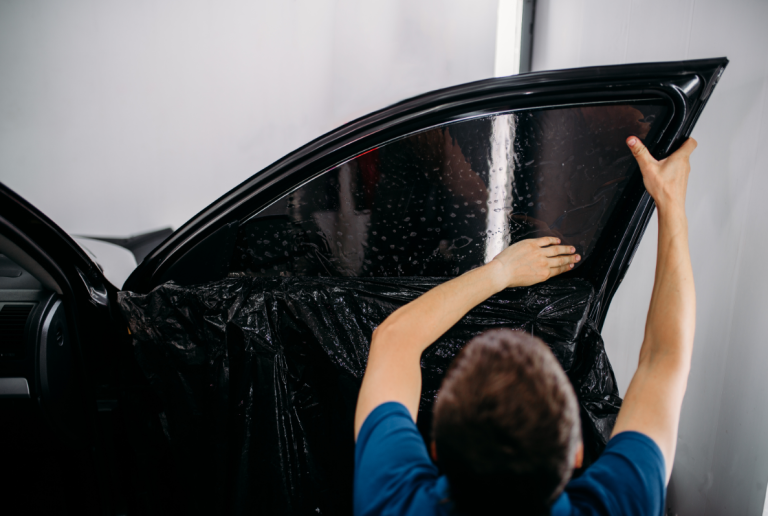
Professional tinting installers have the expertise and equipment to correctly measure, cut, and apply the tinting film to your windows. They understand the intricacies of different tinting materials, ensuring a seamless and bubble-free application that maximizes the film’s performance.
Moreover, professional installation often comes with warranty coverage, providing peace of mind and protection in case of any issues. On the other hand, attempting to tint your windows can lead to subpar results, reduced film lifespan, and even potential legal complications if the tint fails to meet local regulations.
The evolution of car window tinting has been a fascinating journey. It has transformed from a purely aesthetic enhancement to a multifunctional feature that offers a wide range of practical benefits. From UV protection and heat reduction to the latest advancements in intelligent tinting technology, the car window tinting industry has continuously adapted to meet drivers’ evolving needs and preferences. By entrusting the installation process to skilled professionals, you can ensure that your vehicle’s tinting delivers optimal performance and a personalized driving experience for years.