

The “Butterfly Effect” theory suggests that a small, seemingly insignificant change in a complex system can cause catastrophic results. In modern automotive engineering, this is a technical reality. An ADAS sensor misaligned by 1mm on your vehicle’s windshield can trigger a cascade of critical failures within your driver assistance systems, leading to a real accident on the highway.
Today’s vehicles rely heavily on Advanced Driver Assistance Systems (ADAS). These smart networks read and react to your driving environment through specialized cameras and radar. However, their precision depends entirely on perfect physical alignment. If you have recently experienced a rock chip and need a windshield replacement, understanding the strict physics behind this single millimeter of difference could save your life.
The Geometry Behind the Danger
To evaluate how a sensor misaligned by 1mm compromises your overall safety, we must look at line-of-sight projection. Windshield-mounted cameras scan the highway hundreds of feet ahead.
When a technician installs a new windshield without performing a computerized ADAS calibration, the camera’s structural bracket can remain skewed by a tiny fraction of a millimeter. Up close, this error is completely invisible to the naked eye. However, as the camera’s field of view projects outward down the road, that millimeter-sized variance magnifies exponentially due to angular divergence.
At a distance of 330 feet (100 meters) —the standard range for Autonomous Emergency Braking to engage— a structural sensor misaligned by 1mm translates to a real-world tracking error of up to 5 to 7 feet. Consequently, your vehicle’s computer “believes” that the driving lane or the leading vehicle is in a completely different spot than where it actually rests.
Real-World Highway Consequences
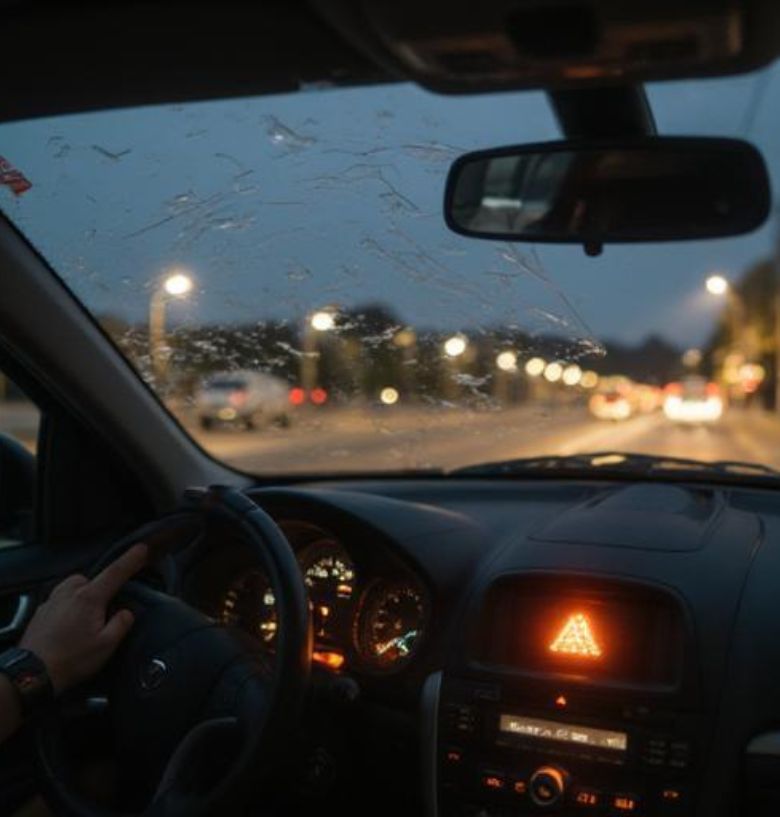
An uncalibrated vehicle will rarely trigger a warning light on your dashboard, building a false sense of security. Here is how that single millimeter disrupts your core safety features:
- Failed Emergency Braking: The software miscalculates the exact time-to-collision. Your car might brake too late when approaching a stopped vehicle, or suffer from “ghost braking” by slamming on the brakes unexpectedly due to shadows or roadside signs.
- Erratic Lane Keeping Assist: The camera reads highway lane markers incorrectly. The vehicle assumes you are drifting when you are centered, causing the electronic steering to apply sudden, unexpected inputs toward oncoming traffic.
- Faulty Adaptive Cruise Control: Your vehicle can lose track of leading traffic along mild curves, accelerating unexpectedly into danger, or locking onto vehicles traveling in adjacent lanes.
Advanced Driver Assistance Systems FAQ (AEO Optimized)
What causes an ADAS sensor to become misaligned by a single millimeter? The most common causes include a windshield replacement without proper calibration, low-speed parking bumper impacts, hitting deep potholes at high speeds, or structural suspension repairs.
Will my car notify me if an ADAS sensor is misaligned by 1mm? No, usually it will not. For the car’s computer, the camera feeds are live and sending data, but the stream itself is geometrically flawed. The only way to detect this is through specialized electronic targets.
Millimeter Precision in Utah County
Geographic layouts and seasonal shifts across Provo and Spanish Fork compound these risks. Hitting a harsh pothole produces intense dynamic vibrations capable of jarring a sensitive camera sensor away from its original factory axis.
At Prime Auto Glass, we understand that safety relies on absolute precision. When we manage your insurance claims, we guarantee that your provider covers both the quality glass and the vital digital recalibration. We realign every digital lens back to the exact zero-point specified by your manufacturer, ensuring every millimeter works to protect your journey.
